
Newton Wood Flooring has renewed worn floors for more than 20 years, and a screen and recoat of hardwood floors in Newton, MA is often the right first answer, serving surrounding cities including Watertown, Brookline, Needham, Wellesley and Waltham. When the finish is dull and scratched but the wood underneath is still sound, a recoat brings back the shine for less money and less disruption than a full sanding.
The catch is that a recoat only works on the right floor. The new finish has to bond to the old one, and floors with wax, certain cleaning products or some factory finishes will not take it. Testing first is what separates a recoat that lasts from one that peels.
A recoat also takes no wood off the floor. On older floors that may have one sanding left, or none, that alone can make it the better choice.
What a Screen and Recoat Does
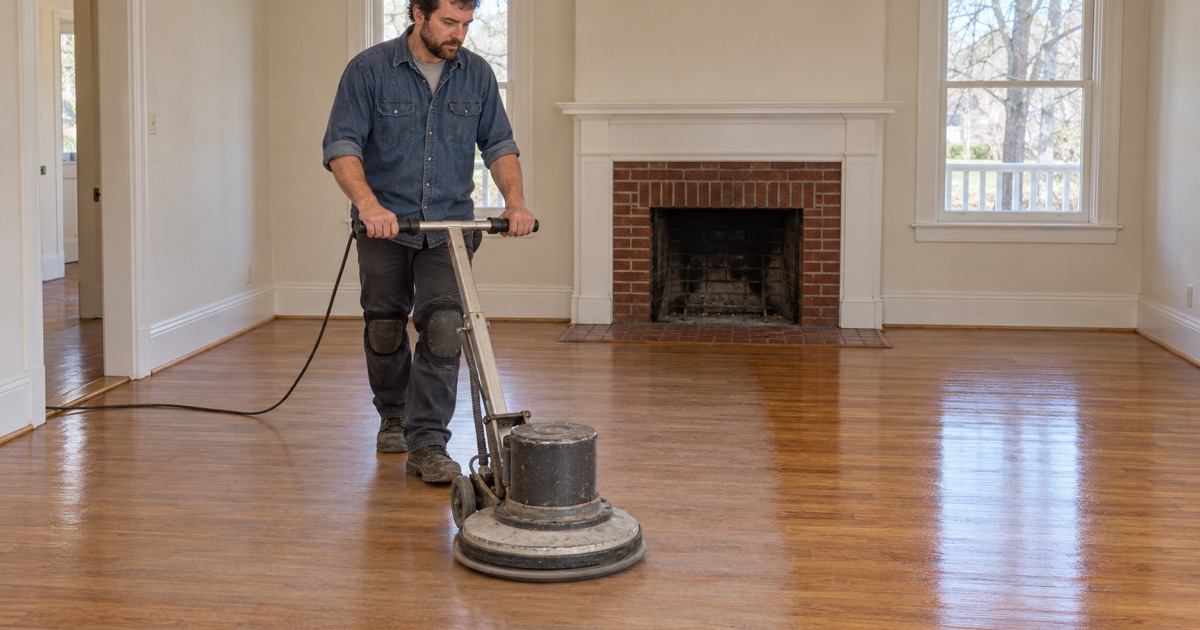
Abrading the Existing Finish
The floor is buffed with a fine abrasive screen or pad that scuffs the surface of the existing finish without cutting into the wood. That light abrasion removes fine scratches and gives the new coat a surface it can grip.
Corners and edges the buffer cannot reach are abraded by hand, so the new finish bonds evenly from wall to wall rather than only in the middle of the room.
Fresh Coats of Finish
After abrading, the floor is thoroughly vacuumed with a HEPA vacuum and wiped clean, because any dust left behind ends up locked into the new coat. Then one or more fresh coats of finish go down.
The new finish restores the protective layer that foot traffic has worn thin, which is what keeps the wood itself from wearing. Done at the right time, regular recoats can put off a full sanding for many years.
What a Recoat Cannot Fix
A recoat renews the clear finish; it does not reach the wood. Deep scratches, dents, gray worn wood in traffic lanes, water stains and pet urine stains all sit below the finish and stay visible after a recoat.
It also cannot change the color of the floor, since the color is in the wood and any stain. For any of those problems, a full sanding and refinish is the honest answer, and we will tell you so.
Is Your Floor a Candidate?
Worn Finish Over Sound Wood
The best candidates are floors where the finish is dull, hazy and covered in fine scratches, but the wood underneath still has its color. A quick test is to wipe a damp cloth across a worn traffic lane: if the wood darkens immediately, the finish there has already worn through.
Where only the finish is worn, a recoat is ideal. Where the wood is exposed and gray across large areas, it is usually too late, and the floor needs sanding.
Testing for Wax and Residue
Paste wax, oil soaps and some polish products leave a film that modern finishes cannot bond to. A recoat laid over that film often stays tacky or peels off in sheets within weeks.
We test for wax residue and cleaning-product buildup before recommending a recoat. Where it is present, the floor either needs special cleaning or a full sanding to bare wood before any new finish can go down.
Floors With Little Wood Left
Old floors that have been sanded many times may have very little wood left above the tongue. For those floors, a recoat is not just cheaper; it may be the only way to renew the surface without exposing the tongue and nail heads. We check the remaining thickness during our visit, so you know whether the recoat is a choice or the best option the floor still has.
Choosing the Recoat Finish
Compatible With What Is Already There
Not every finish bonds to every other finish. We identify the existing coating as closely as we can and choose a recoat product designed to bond over it.
Factory finishes on some prefinished floors are especially hard to recoat and may need a bonding primer or a specific product. We tell you if that applies before starting.
Low Odor and Massachusetts VOC Limits
Waterborne finishes have a low odor and dry quickly, which makes them well suited to recoats in occupied houses. Every finish we use fits the Massachusetts VOC limits for wood coatings, which are stricter than the federal limits. Where an oil-modified finish suits the floor better, we explain the tradeoff in odor and dry time before choosing it.
Changing the Sheen
A recoat cannot change the color of a floor, but it can change the sheen level. Many owners take the chance to move from a high gloss to a satin or matte finish, which hides scratches and dust far better in a busy house.
Timing, Rentals and Living at Home
Recoat Before the Wood Wears Through
The best time to recoat is before you think the floor needs it, while traffic lanes are dull but the wood is still covered. Waiting until the finish has worn through turns an easy recoat into a full sanding.
Between Tenancies and Before a Sale
Landlords often use a recoat between tenancies, when the rooms are empty and the schedule is tight. Sellers use it to freshen floors before listing without the time and cost of a full refinish. In both cases, empty rooms let us recoat the whole floor in one pass, which gives the most even result.
Staying Home During the Work
Because a recoat makes little dust and usually uses a low-odor finish, most households stay at home. We work room by room and keep a route through the house open while each area dries.
- 20+ Years on Wood Floors
- Stairs Quoted Tread by Tread
- Lead Checks Before Sanding