
Newton Wood Flooring has stained and finished hardwood floors for more than 20 years, and hardwood floor staining in Newton, MA is one of the decisions we spend the most time on with homeowners, serving surrounding cities including Watertown, Brookline, Needham, Wellesley and Waltham. Color is the part of a refinish you notice every day, and the part that is hardest to change once it is done.
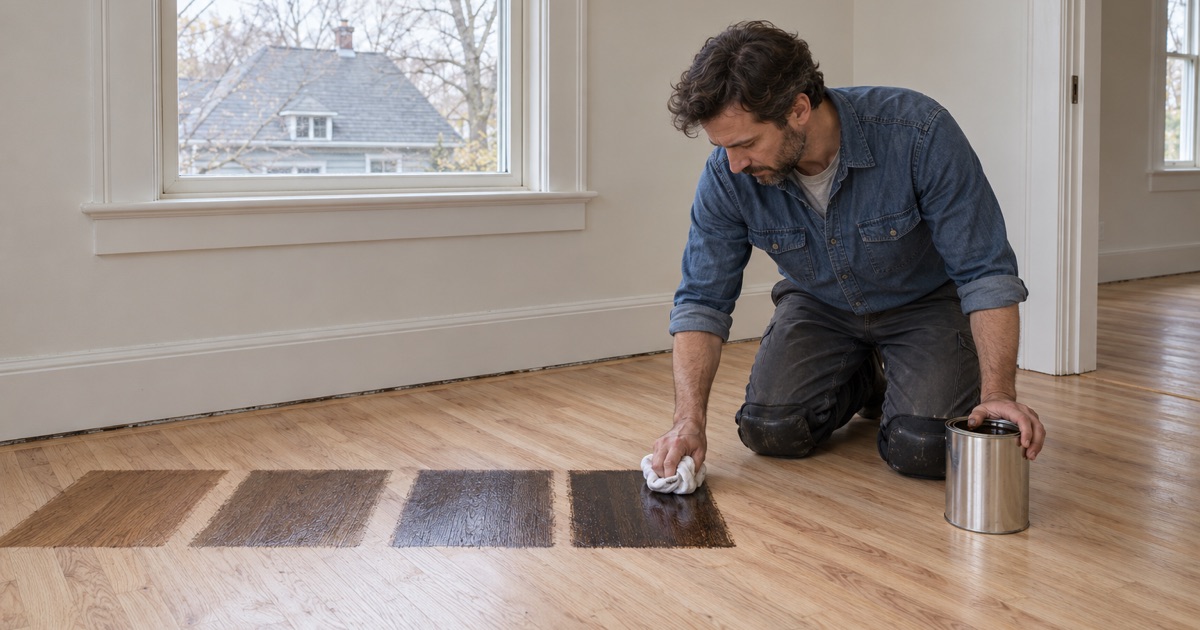
That is why we never choose a stain from a card. Stain samples are laid on your own sanded floor, in your own light, and you look at them in the morning and the evening before anything is decided.
The species of the floor, how it was sanded and the finish that goes over the stain all change the final color. We explain each of those so the color on the floor is the one you expected.
How Your Floor’s Species Changes the Color
Red Oak
Red oak strip flooring turns up in a great many older houses, and it takes stain readily thanks to its open grain. Its natural pink and red undertones can show through some stains, especially gray and brown shades, giving a result that looks pink rather than neutral.
We test those shades on your boards first. Sometimes the fix is a slightly warmer or cooler version of the same color; sometimes it is choosing a different shade altogether.
White Oak
White oak has a tighter grain and a more neutral, olive-brown tone than red oak. It takes natural, gray and light brown finishes well, which is why it is a common choice for lighter, modern looks.
Rift and quartersawn white oak, with its straight grain and fine ray fleck, often looks best with a light stain or none at all, so the figure of the wood carries the floor.
Maple and Pine
Maple and eastern white pine absorb stain unevenly, which leads to blotching, where some patches drink in color and others barely take it. Maple’s dense grain resists stain, while pine’s soft and hard bands absorb it at very different rates.
Many owners choose to leave these floors natural or lightly toned. Where a darker color is wanted, we test techniques on the floor itself so you see the result before the whole room commits to it.
Samples on Your Floor, in Your Light
Why Samples Go on the Actual Floor
A stain card or a sample board is made on one piece of wood, sanded one way and seen under showroom lights. Your floor may be a different species, a different age, sanded with a different grit sequence and lit by windows facing a different direction.
We lay stain samples directly on your sanded floor, side by side, in the rooms that will get the color. Seeing them at different times of day is the closest thing to living with the floor before it is finished.
How Sanding Changes Absorption
The final grit used in sanding changes how much stain the wood absorbs. A floor finished with a coarser grit takes more stain and looks darker; a finer grit gives a lighter, more even color. We sand the sample area with the same grit sequence as the rest of the floor, so the samples predict the finished floor rather than a different one.
Water Popping for Even, Deeper Color
Water popping means wetting the sanded floor so the grain opens before the stain goes on. It helps darker colors penetrate more evenly and can reduce the patchy look some floors show with deep stains. It also darkens the result, so we include water-popped samples alongside regular ones when you are deciding between deeper shades.
Popular Color Directions
Natural and No Stain
Many people choose no stain at all, with a clear finish that shows the wood’s own color. On white oak, maple and old pine, this is often the most attractive option, and it is the easiest look to touch up and keep consistent through future repairs.
Moving Away From Orange Oak
Orange oak is usually the result of an oil-based finish that ambered over many years, sometimes on top of an amber stain. Sanding to bare wood removes it, and a clear waterborne finish keeps the new color close to natural oak. Where you want to cool the color further, a lightly toned stain can be tested to cancel some of red oak’s warmth.
Dark Stains
Deep brown and near-black floors look striking, but they show dust, pet hair and fine scratches more than any other color, especially in sunny rooms. A matte or satin sheen helps, and we always lay a slightly lighter option beside the darkest sample so you can compare.
Stain and Finish Work Together
The Finish Changes the Color
The clear finish over a stain affects the final color. Oil-modified polyurethane adds an amber tone that deepens and warms over time, while waterborne polyurethane stays clear and keeps cooler stains looking as intended. We sample the stain under the finish we plan to use, so the color you approve is the one you will live with, not the bare stain.
Matching Stairs, Patches and New Boards
Where a refinish includes stairs, patched areas or new boards woven into an older floor, the same stain can look different on each. We test on every type of wood involved, so the stairs, the patches and the original floor all read as one surface once the finish is on.
- 20+ Years on Wood Floors
- Stairs Quoted Tread by Tread
- Lead Checks Before Sanding