Wood Floor Refinishing and Repair in Newton, MA

Prewar oak, maple and pine sanded, patched and refinished, with the remaining board thickness measured before anything is promised.

Newton Wood Flooring has spent more than 20 years on wood flooring in Newton, MA, refinishing, repairing, staining and installing hardwood floors, from a single water-stained room to every level of an older house. Most of our work starts with a floor worth keeping: prewar oak, maple or pine that can be sanded and refinished rather than torn out, once we have measured how much wood is left above the tongue.

We also take on the jobs around a refinish. That means weaving matching boards in where radiators came out, patching floors where a wall was removed, drying and documenting water damage, quoting stairs tread by tread, and laying new solid or engineered floors where the old ones cannot be saved.

Every estimate starts with the same three questions: when the house was built, what finish is already on the boards, and what moisture the floor is sitting over. The answers set the sanding plan, the finish and the schedule, so the price reflects the floor you actually have.

Get Your Free Quote

Fast response • No obligation

So we can reach you about your request.

So we can send you a confirmation after you submit this inquiry form.

  • 20+ Years on Wood Floors
  • Stairs Quoted Tread by Tread
  • Lead Checks Before Sanding

What we do

Our Services

Wood floor refinishing, repair and installation in Newton, MA

Worker edging bare oak around the facets of a bay window in a prewar Newton front room.

Wood Floor Refinishing

Full sanding and refinishing of hardwood floors, with the remaining wood measured and old wax tested before any new finish goes down.

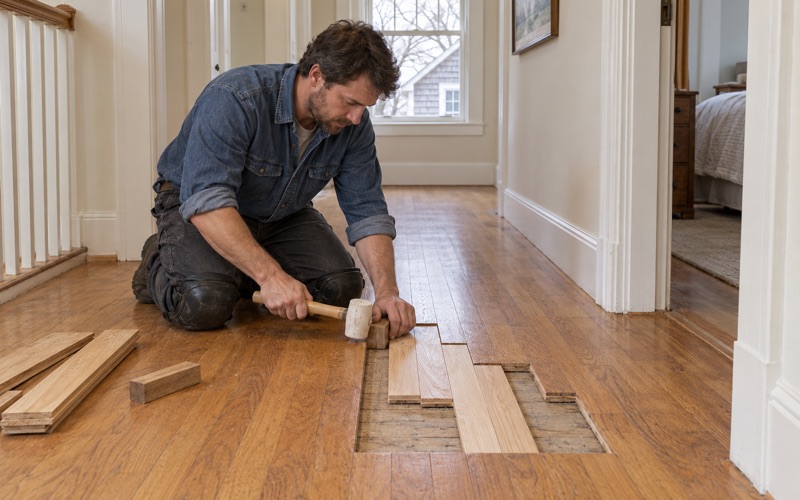
Worker tapping a new oak board into a staggered lace-in repair in the hall of a Newton house.

Hardwood Floor Repair

Board replacement, weave-in patches and squeak repairs that make a damaged hardwood floor read as one floor again.

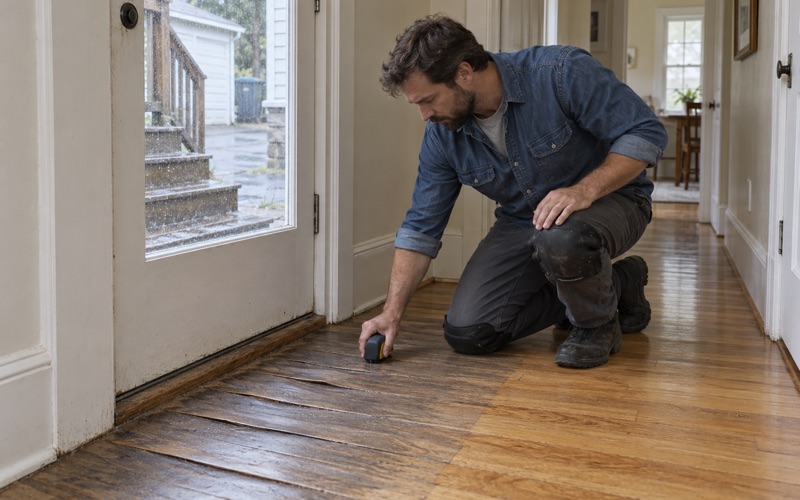
Worker pressing a moisture meter onto cupped oak boards inside the back door of a Newton kitchen hall.

Hardwood Floor Water Damage

Water-damaged hardwood traced, dried and measured before any board is replaced, with the damage documented room by room for the insurance claim.

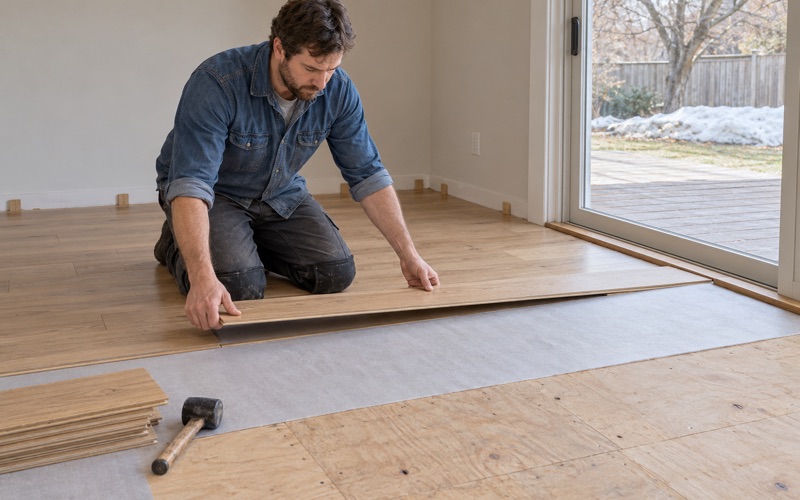
Worker angling a wide engineered white oak plank into the row before it over underlayment in a Newton family room.

Engineered Hardwood Flooring

Engineered wood floors chosen for the room they go in, from damp lower levels to condos with underlayment rules, and installed to suit the subfloor.

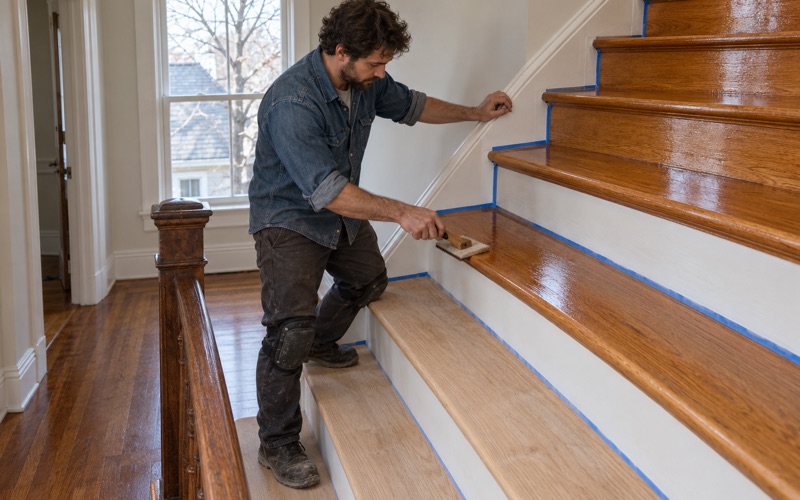
Worker coating oak stair treads from the top down, backing down the staircase of a Newton house.

Hardwood Stair Refinishing

Staircases sanded and refinished by hand, tread by tread, including painted and carpeted stairs brought back to wood.

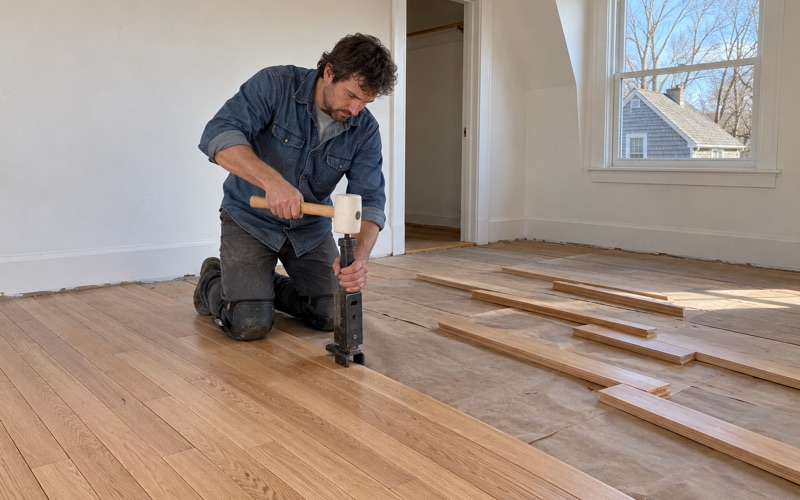
Worker striking a manual flooring nailer seated on the tongue of a new red oak board in a Newton house.

Hardwood Floor Installation

New solid hardwood floors laid over a checked subfloor, acclimated to the house and finished in place to match the rooms around them.

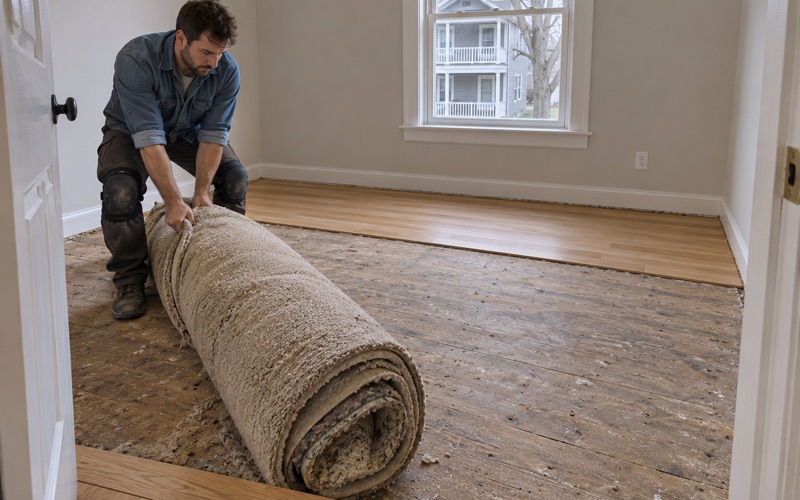
Worker dragging a rolled-up wall-to-wall carpet toward the door of a Newton bedroom where new oak is going down.

Replace Carpet With Hardwood

Carpet taken up and replaced with wood, whether that means refinishing the oak hiding underneath or installing a new hardwood floor.

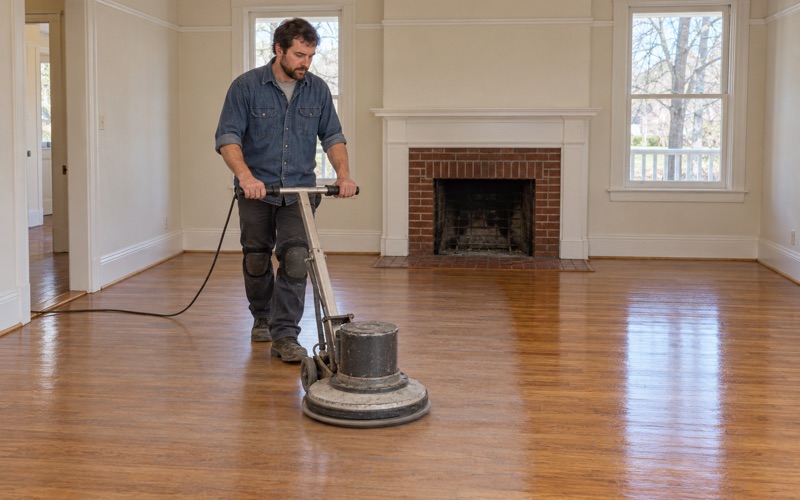
Worker running a rotary buffer with a screening pad over a sound finished oak floor in a Newton living room.

Screen And Recoat Hardwood Floors

A worn floor finish renewed without sanding to bare wood, for floors whose wood is still sound but whose finish has gone dull and scratched.

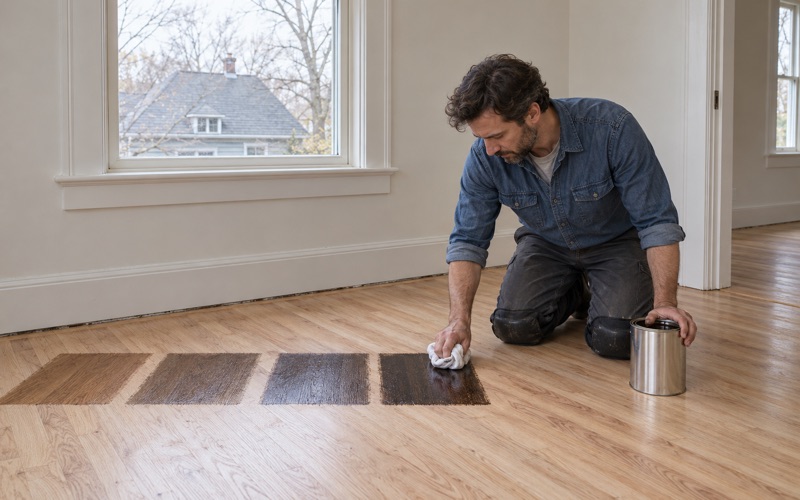
Worker wiping stain test squares onto bare red oak by a window in a Newton house to compare colors before the floor is stained.

Hardwood Floor Staining

Floor color chosen from samples on your own sanded boards, then applied evenly and sealed under a finish that suits the color you picked.

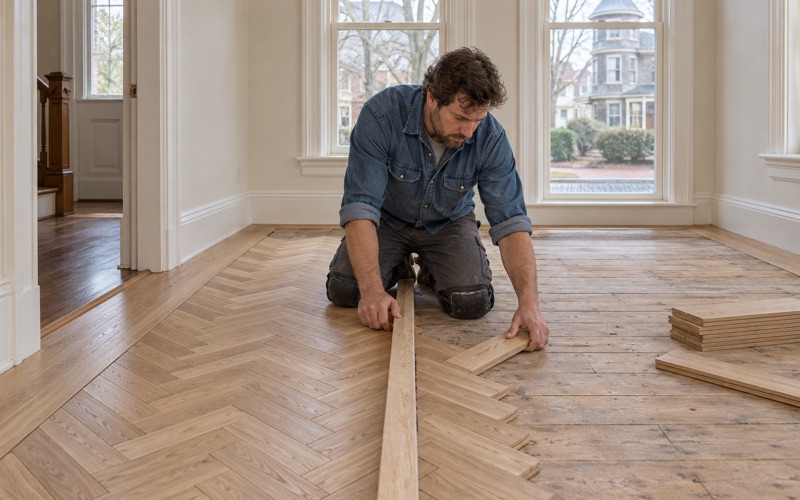
Worker pressing a white oak herringbone block against a straight guide board laid down the center of a Newton dining room.

Herringbone Wood Floor

Herringbone, chevron and wide plank wood floors planned around the room's sightlines, installed over a flat subfloor and finished in place.

A Floor Contractor With Two Decades on the Job

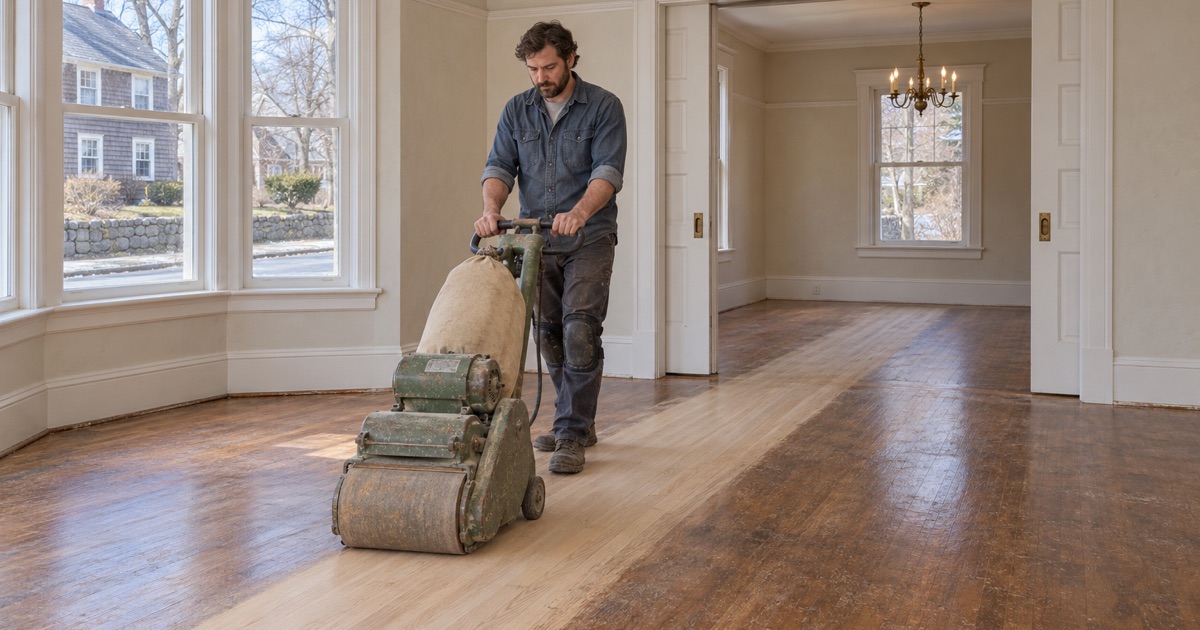
Worker guiding a drum sander through the front room of a prewar Newton house, the pocket doors to the dining room drawn back.

More Than 20 Years on Wood Floors

We have worked on wood floors for more than 20 years, long enough to sand floors that earlier crews had already sanded and to redo repairs that were done badly the first time. That history is why we measure, test and ask about the house before quoting, rather than pricing a refinish from a photo.

Why Choose Newton Wood Flooring

Thickness Measured First

No full sanding is promised until we have measured the wood above the tongue at a register or threshold, because older floors around Newton have often been sanded several times already, so a floor with one pass left gets a lighter plan rather than being sanded through to the tongue by a crew that never looked.

Radiator Holes Woven In

Where steam radiators and their pipes came out, we weave matching boards into the surrounding field and stagger the joints, so the repair reads as floor rather than as the putty fill or square plug a hurried contractor leaves showing from across the room.

Lead Rules Before Sanding

Every job in a house built before 1978 starts with the build year and a look at painted surfaces, because Massachusetts runs its own lead-safe renovation rules, so painted borders and baseboard edges are dealt with first rather than fed into a drum sander and spread through the house.

Finishes That Actually Bond

Never does a new coat go over an old floor before we test for wax and cleaning-product residue, and every finish we use fits the Massachusetts VOC limits for wood coatings, so the coating grips and lasts rather than staying tacky or peeling in sheets within a season.

Two-Families Kept Livable

In an owner-occupied two-family, one floor is worked at a time with the dust kept inside that unit, so the household on the other floor keeps living in the house rather than moving out for a week because the whole building was sanded at once.

When The Floor Has Gone Wrong

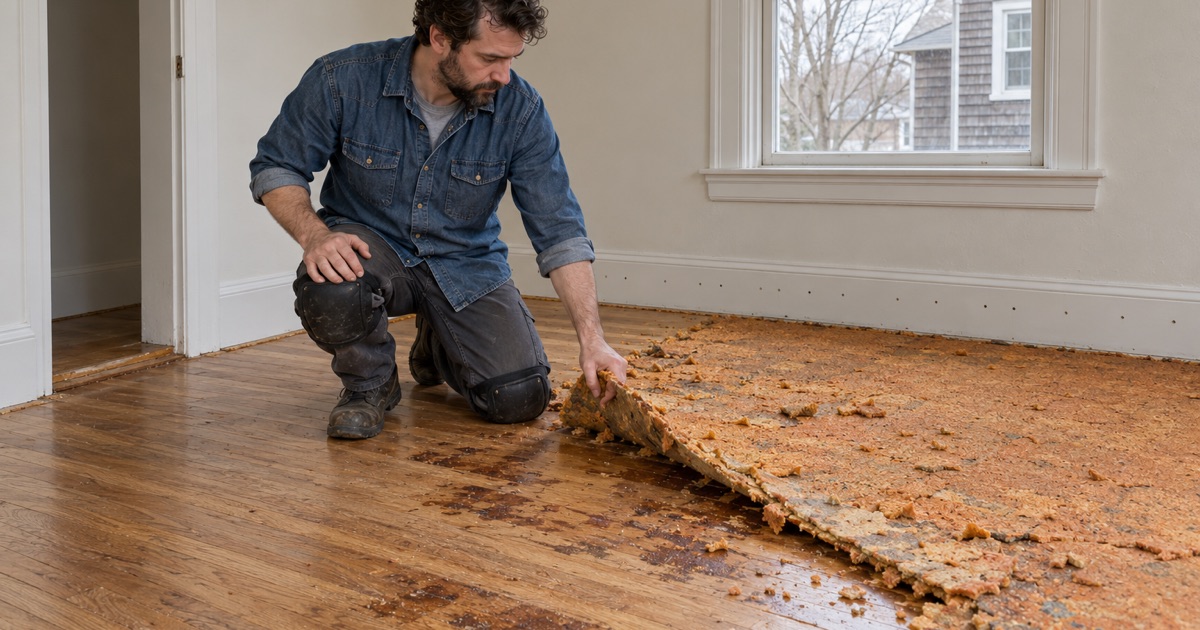
Worker peeling old carpet pad that has stuck to an oak floor, uncovering stained boards and tack-strip holes in a Newton bedroom.

Cupping and Buckling After a Burst Pipe

When a burst pipe or a dishwasher overflow soaks a floor, the boards swell across their width, the edges rise into cupping, and in bad cases the field lifts off the subfloor as buckling. We trace the source, dry the area and take moisture meter readings over several days before any board is replaced. Sanding a cupped floor before it dries flat leaves it crowned once it does.

Water in a Finished Basement or Lower Level

Water in a finished basement often comes from below grade, through the slab or a foundation wall, rather than from one leak. We measure the moisture the floor is actually sitting over and decide whether the wood can be dried in place or has to come up. Solid hardwood rarely belongs back down there, so a replacement is usually engineered wood over a vapor retarder.

Winter Gaps Between Boards

Gaps that open every winter once the heat comes on are seasonal movement: dry indoor air pulls moisture out of the boards and they shrink. We tell you whether you are looking at normal winter gaps that close again in summer or at something larger, such as a floor laid too wet. Filling seasonal gaps is a mistake, because the filler crushes or pops out when the boards swell back.

Pet Urine Stains Through to the Subfloor

Black pet urine stains are a chemical change in the wood, not surface dirt, and a stain that has gone black has usually soaked through the board. Sanding lightens the top but rarely removes it, so we cut out the stained boards and weave in replacements. Where the odor reached the subfloor, that section is treated or replaced before new wood goes down.

Traffic Lanes in Halls and Kitchens

Traffic lanes are the dull gray paths worn through the finish where everyone walks, down a hall, in front of the sink and at doorways. If the finish is worn but the wood is not, a screen and recoat can restore it; once the wood itself is gray and dented, the floor needs a full sanding. We show you which case you have before quoting either.

Squeaks, Nail Pops and Loose Floorboards

Squeaks and loose boards come from movement between the flooring, the subfloor and the joists, often where old cut nails have worked loose. We find where the movement is and refasten from above or below, replacing fasteners that have backed out. Fixing squeaks before a refinish matters, because face nails set afterward leave filled holes in a fresh finish.

Carpet Pad, Staples and Tack Strip

When old carpet comes up, the carpet pad is often stuck to the wood in a crumbling layer, with staples across the field and tack strip nailed along the walls. We scrape the pad, pull every staple and strip, and fill or patch the holes they leave. That prep decides how the edges of the refinished room look, where tack-strip holes are the first thing anyone notices.

Exit Holes and Frass From Wood-Boring Beetles

Small round exit holes with fine powder, called frass, beneath them are the sign of wood-boring insects such as the powderpost beetle or the old house borer. We note where the holes are and whether fresh frass suggests the insects are still active, and we point you to a pest professional when they may be. Weakened boards are replaced, and refinishing waits until the problem is dealt with.

Soft Subfloor at a Toilet or Entry Door

A floor that gives underfoot near a toilet or an entry door usually means water has been reaching the subfloor for some time. We open the area, cut back to sound subfloor and replace the damaged section before laying matching boards on top. Refinishing over a soft subfloor only hides the problem until the boards above it crack or sink.

A Finish That Peeled Off an Old Waxed Floor

A finish that stays tacky or peels in sheets on an older floor is usually sitting on wax residue or a cleaning product the new coat could not grip. We test for residue before any finish goes down and remove it, by sanding to bare wood or with the right cleaning step. Skipping that test is one of the most common reasons a screen and recoat fails.

Blotchy Maple and Pine, Pink Red Oak

Maple and eastern white pine take stain unevenly and go blotchy, while some stains turn red oak strip flooring pink rather than brown. We lay stain samples on your own floor, in your own light, and use water popping where it evens the color. Seeing the color on the actual boards before committing is the cheapest way to avoid sanding the floor twice.

Bringing Back The Floor You Already Have

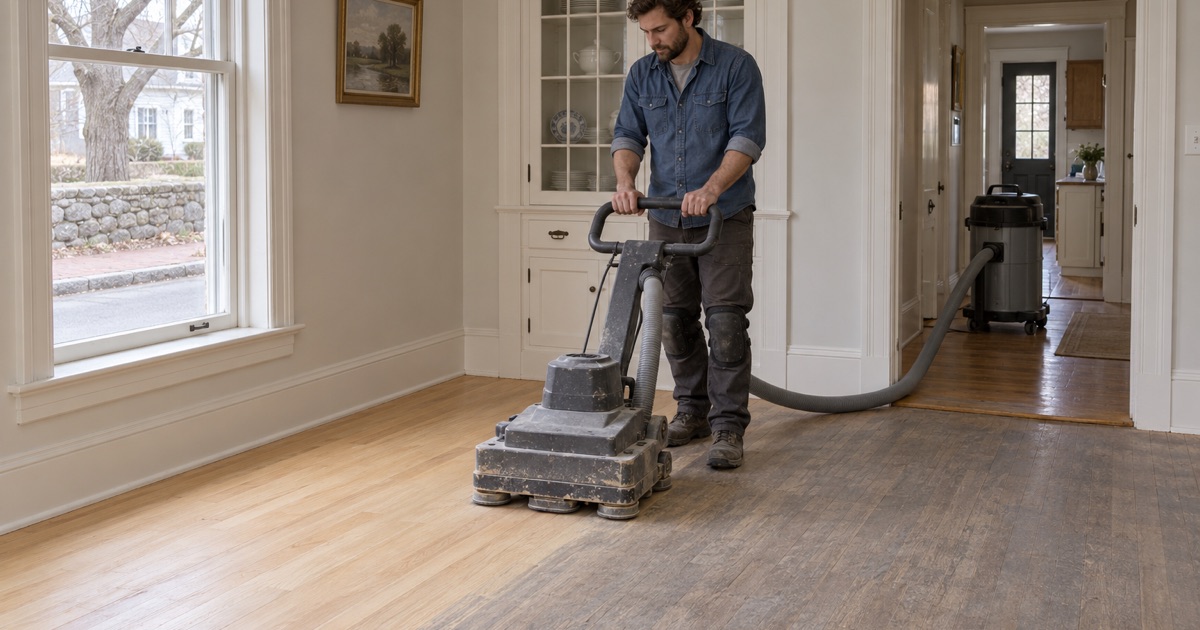
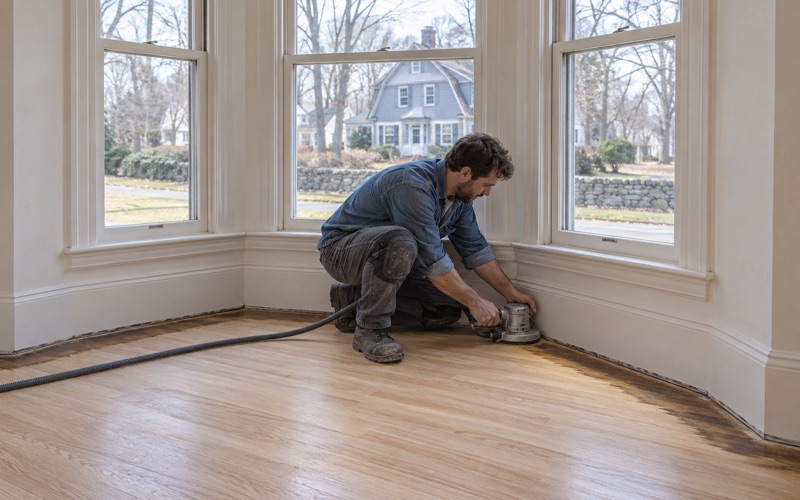
Worker running a low-dust orbital floor sander across the original oak of a prewar Newton dining room, a vacuum hose attached.

Full Sanding or a Screen and Recoat

A full sanding takes the floor to bare wood with a drum sander and a grit sequence, while a screen and recoat only abrades the top coat and adds fresh finish. We recommend a recoat when the wear is in the finish alone, and a sanding when stains, scratches or gray wood go deeper. A recoat costs less and removes no wood, so it is worth choosing whenever it will do the job.

Oak Uncovered Under Wall-to-Wall Carpet

Oak found under carpet is often in better shape than expected, because the carpet shielded it from wear and sun fade. We remove the pad, staples and tack strip, measure the thickness, and patch spots where the floor was cut for ducts or wiring. Many floors uncovered this way need only one full sanding and finish to look like solid oak again.

Radiator Removal Patches

When steam radiators come out, they leave pipe holes and a rectangle of discolored wood where the radiator stood. We pull the damaged boards and weave in matching wood, staggering the ends so the patch follows the existing pattern. A radiator removal patch done this way disappears after sanding, while a square plug stays visible for the life of the floor.

Floor Patches Where a Wall Came Down

Taking out a wall leaves a strip with no flooring, or boards running the wrong way, where the wall stood. We lace new boards into the floor on both sides so the joints break naturally, and we do the same where an outlet or vent was moved. The aim is that nobody standing in the room can tell where the wall used to be.

Orange Oak Taken Back to Natural

Orange oak is usually an oil-based finish that has ambered over the years, sometimes on top of an amber stain. Sanding to bare wood removes it, and a waterborne polyurethane keeps the new color close to natural. We show the difference on samples first, because red oak and white oak react very differently to natural and lightened finishes.

Old Pine Floors With Wide Gaps

Old eastern white pine floors are soft, often wide plank, and after a century of use they usually show wide gaps and splintered edges. We sand pine gently, refasten loose boards, and decide whether to fill gaps based on how much the boards still move with the seasons. Too aggressive a pass removes the patina that makes an old pine floor worth keeping.

Floors With One Sanding Left

A floor sanded many times may have very little wood left above the tongue, and sanding through it exposes the tongue and the nail heads. We measure the remaining thickness before promising anything. Where one sanding remains we plan a lighter grit sequence, and where none remains we recommend recoating or replacement instead.

Stair Refinishing, Tread by Tread

Stairs are hand work: each of the stair treads, risers and the stair nosing is sanded with smaller tools, and painted stairs need the paint dealt with before any sanding. We quote stairs tread by tread because a staircase is not priced by the square foot. The result is a staircase that matches the refinished floors it connects.

Dust Control and Staying at Home

Dustless sanding means sanders connected to a HEPA vacuum, which catches most of the dust at the machine instead of letting it settle through the house. We seal off work areas and sequence the coats so the rooms you live in stay usable as long as possible. Waterborne finishes cut the odor, and we tell you how long each room has to stay empty while it cures.

Refinishing Before a Listing or a Move-In

Refinishing before a house goes on the market or before you move in is simpler than at any other time, because the rooms are empty and nobody has to live around the work. We fit the schedule to your sale and moving dates and choose finishes that cure in time. An empty house also lets us sand every room in one continuous pass, which gives the most even result.

Putting In New Wood Floors

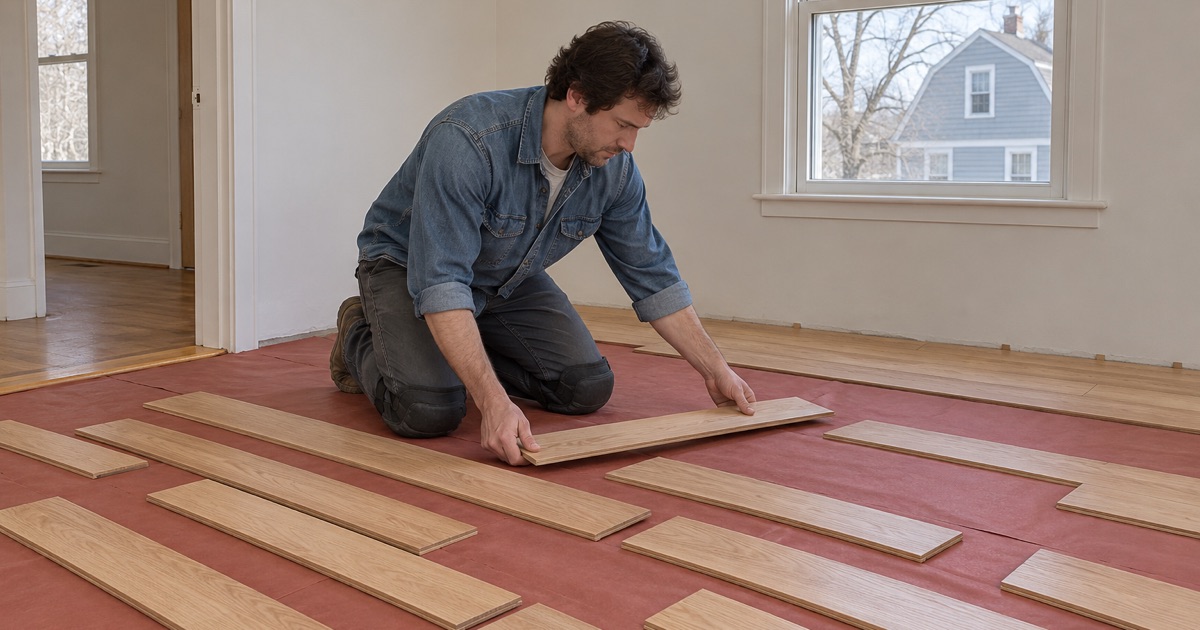
Worker racking out new white oak boards over red rosin paper on the subfloor of a Newton room before nailing begins.

Solid, Engineered and Vinyl Plank Compared

Solid hardwood can be sanded many times; engineered flooring has a real wood wear layer over a plywood core and stays more stable where humidity varies; vinyl plank is not wood at all. We explain where each makes sense in your house, including the rooms where solid wood would be a poor choice. Picking the right product for the room matters more than picking the most expensive one.

Replacing Carpet With Hardwood

Replacing carpet with hardwood starts with taking up the carpet, pad and tack strip and checking the subfloor for flatness and soundness. We match the new floor’s height to the rooms around it with the right thickness, reducer or threshold, then install and finish it. One room or a whole floor follows the same steps; the difference is mostly in the transitions.

Carpeted Stairs Converted to Wood Treads

Carpeted stairs are often built from rough treads that were never meant to be seen. We pull the carpet and either refinish the existing treads, if they are hardwood, or fit new stair treads and risers with a proper stair nosing. Each new tread is cut to its own step, because older staircases are rarely square.

Engineered Flooring Below Grade

Rooms below grade carry more moisture than the floors above them, and solid hardwood answers it by cupping. We measure the moisture in the slab or subfloor, then choose engineered flooring with a suitable wear layer over the vapor retarder or underlayment that condition calls for. Matching the floor to the measured moisture is what keeps a basement floor flat.

Prefinished or Site-Finished Hardwood

Prefinished flooring arrives with a factory finish and small beveled edges, and it can be walked on soon after installation. Site-finished flooring is sanded and coated in place, giving a flat, continuous surface and a free choice of stain and sheen level. We explain how each lives day to day, including how scratches, repairs and later recoats are handled.

Herringbone and Chevron Floors

Herringbone uses square-cut boards laid in a staggered zigzag, while chevron uses boards cut at an angle so they meet in a point. Both need a carefully set center line and precise cutting, because small errors compound across a room. We plan the layout around the room’s main sightlines, and any border and inlay, before the first board is cut.

Wide Plank White Oak and Hickory

Wide plank floors in white oak or hickory make a room feel calmer and older, but wider boards move more with seasonal humidity. We rely on proper acclimation, the right fastening and often engineered construction for the widest boards. Hickory’s high Janka hardness makes it durable, though its strong color variation is best judged from samples first.

Nail-Down, Glue-Down and Floating Floors

Nail-down installation suits solid hardwood over a wood subfloor, glue-down suits concrete and many engineered products, and a floating floor rests on underlayment without being fastened. We choose the method that fits your subfloor, product and room. The NWFA Installation Guidelines and the manufacturer’s instructions decide which methods are acceptable, not convenience.

Flooring Cleats or Staples

Flooring cleats and staples both hold tongue and groove boards down, but they grip differently and suit different species and thicknesses. We use the fastener the flooring manufacturer specifies, at the right spacing and depth. The wrong fastener or angle can split tongues and cause squeaks later, which is why the choice is never left to habit.

Old Houses, Condos And Claims

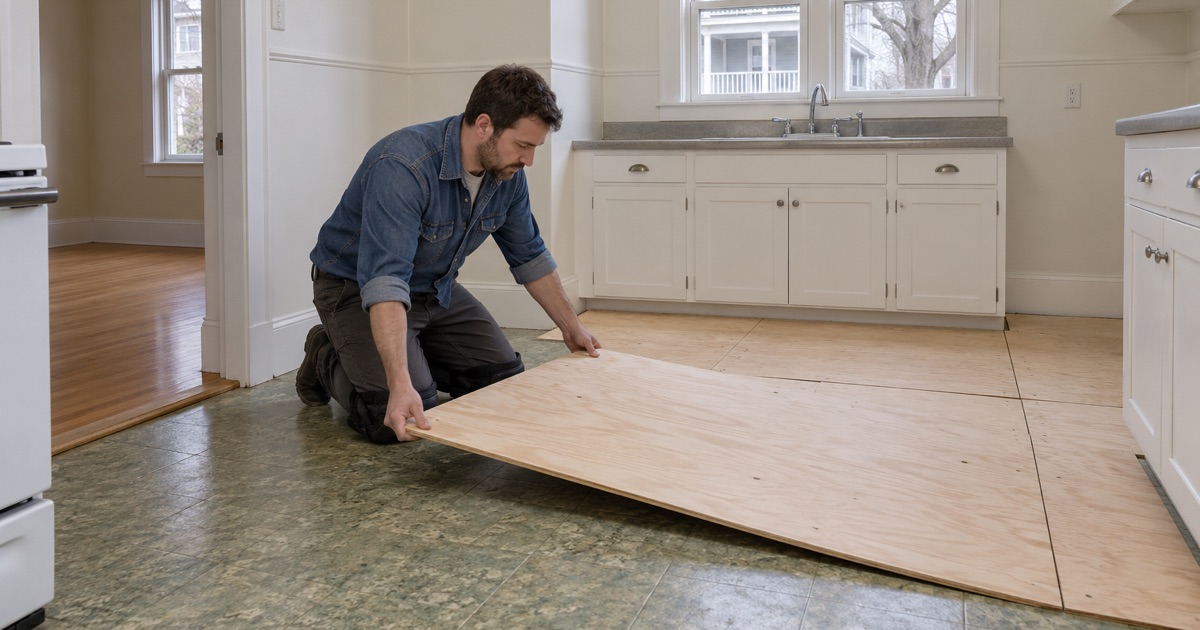
Worker lowering a plywood sheet over old kitchen floor tile in a Newton two-family so the tile is covered in place rather than torn up.

Lead-Safe Work in Homes Built Before 1978

Any house built before 1978 may have lead paint, and sanding a painted surface can spread lead dust through a home. Massachusetts runs its own lead rules, 454 CMR 22.00, alongside the federal EPA RRP Rule, so we confirm the build year and look for painted borders, baseboards and stairs first. That check happens before the sander arrives, not after.

Old Floor Tile and Black Mastic Under Carpet

Taking up carpet sometimes uncovers old resilient floor tile, often with black mastic adhesive beneath it, and some older tiles and mastics contain asbestos. We identify these materials and do not sand, scrape or grind them. The work stops until the right trade has tested and handled them, and then we pick the floor back up.

Condominium Floor Rules and Underlayment

Many condominium associations restrict floor types or require a specific underlayment to limit noise between units. Those rules live in the association’s own documents under M.G.L. c.183A, the state condominium statute, so we ask to see the actual master deed, bylaws or rules rather than relying on what a neighbor remembers. Any required underlayment then goes into the installation plan from the start.

A Leak From the Unit Upstairs

A leak from the unit above often ends up in the floor below, and who pays depends on where it started, the association’s documents and the insurance policies involved. We trace the moisture, document the damage and give you a repair scope you can share with everyone involved. Settling that scope early heads off arguments later about what the leak actually damaged.

Refinishing One Floor of a Two-Family

In an owner-occupied two-family, the household on the other floor still needs to live there while work goes on. We work one unit at a time, seal off shared stairs where we can, and schedule sanding and finish coats around both households. Keeping the dust and odor in one unit is what lets the rest of the house carry on.

Documenting Floor Damage for the Adjuster

An insurance adjuster needs clear, consistent records of what was damaged and how. We document floor damage room by room with photos, moisture meter readings and notes on which boards can be saved. A record made at the start makes it easier to agree on the repair before anyone argues about it.

What a Policy Covers Below Grade

Many homeowners policies treat water from a sudden burst pipe differently from water that seeps in from the ground or backs up from a drain. We cannot tell you what your own policy covers, but we can document where the water came from and what it did to the floor. That record lets you and your agent read the policy against what actually happened.

Turning a Rental Floor Between Tenancies

Between tenants, landlords often need a floor refreshed quickly, with a screen and recoat or a full sanding depending on wear. We schedule the work into the gap between leases and record the floor’s condition. Massachusetts limits security deposit deductions under M.G.L. c.186 s.15B, so a dated record of the floor at move-out can matter.

Refinishing Before a Sale

Before a sale, sellers weigh whether refinishing is worth doing or whether a buyer will simply ask for a credit. We give a clear price and timeline so that decision is made with real numbers. Who pays is a matter for the purchase agreement, and we can schedule the work around the dates it sets.

Protecting New Floors Through a Renovation

New floors are easily damaged by the trades who work in the house after them. We schedule floor work late in a renovation where possible and cover finished floors with breathable protection until the rest of the work is done. That protection keeps paint, plaster and dropped tools from undoing a floor you just paid for.

Areas We Serve

Newton Wood Flooring provides wood-flooring throughout the greater Newton area, with the same crews and the same standards on every job.

Good to know

Frequently Asked Questions

How is the price of a floor refinishing job worked out?

The price follows the floor rather than a flat rate: the square footage, how worn it is, whether boards need replacing first, whether you want stain, and how many finish coats go down. Stairs are priced tread by tread on top of that. We measure and inspect before quoting, so the number reflects the floor you actually have.

How long does a full sanding and refinish take?

Sanding, any stain and the finish coats are spread over several days, because each coat has to dry before the next one goes on. Waterborne finishes dry faster than oil-modified ones. Furniture and rugs then wait a little longer while the finish cures, and we give you those dates before the work starts.

Can we live in the house while the floors are done?

Usually, yes, if the work can be split into areas. We seal off the rooms being sanded, connect the sanders to a HEPA vacuum, and plan the finish coats so you keep a usable route through the house. The one exception is the room being coated, which has to stay empty until it can be walked on.

How do you know whether my floor can be sanded again?

We look at a cut edge, usually at a floor register or a threshold, and measure how much wood is left above the tongue. A floor with plenty of wear layer can take a full sanding; a thin one may only take a screen and recoat. We tell you which before anything is promised.

Why do you ask when my house was built?

Because the build year decides which lead rules apply. Massachusetts runs its own lead-safe renovation rules for homes built before 1978, and painted borders, baseboards and stairs are common in older houses. Knowing the year tells us what to check before a sander touches anything painted.

Which finish do you recommend for a family with kids and pets?

Most households do well with a waterborne polyurethane in a satin or matte sheen, which hides scratches better than gloss and has a low odor. Oil-modified polyurethane and hardwax oil are options where the look or upkeep suits you. Every finish we use fits the Massachusetts VOC limits for wood coatings.

Can new boards be matched to my old floor?

In most cases, yes. We match the species, width and thickness, weave the new boards into the existing pattern, and then sand and finish the whole room together so the repair blends in. Very old or unusual floors sometimes need salvaged boards, and we tell you if that is the case.

Should a basement get solid hardwood or engineered wood?

We measure the moisture first, and below grade it usually points to engineered wood. Its plywood core moves far less than a solid board when humidity changes, and it can be installed over a vapor retarder suited to the slab. Solid hardwood in a damp basement tends to cup within a season.

Will you work with my insurance company after water damage?

We document the damage room by room for the adjuster, with photos, moisture meter readings and a clear note of which boards can be saved. What your policy covers is between you and your insurer, but a consistent record from the start makes it easier for everyone to agree on the scope of the repair.

What should I do first when water gets onto my wood floor?

Stop the source, take up the standing water, and get air moving across the floor. Then call before sanding or replacing anything, because cupped boards often flatten as they dry. We take moisture readings over several days to see whether the floor recovers or has to be repaired.

Ready to Get Started?

Request a free quote today and we'll get back to you fast.